Today I saw a grandmother wheelying her handicapped grandson in a broken wheelchair through slush and mud to the Kids-club in the Care House. Purposefully. I saw a list with tens of volunteers from the Macha community noting their willingness to assist in keeping the transitional care flowing, with nobody asking anything in return. I went through the community and saw people palavering with other people, nodding, often with displaying smiles on their faces. I heard of equipment being blown up by lightening and electricity surges, and saw concerned engineers wondering about how to help people going without service. I heard of ideas and plans how to alleviate difficulties. I heard a call from exotic birds. While standing outside I heard the rain approaching. I heard nice words spoken by many, and saw most people trying their level best to bring out the best from themselves to serve others. I used four different computers linked to the Internet, I communicated from the rural African bush with peers around the world via various means of media. I saw a photographer taking pictures with a digital camera, documenting what is happening.
Wow, and we are not even halfway through this day. When news papers would report on all positive news, they would be too thick to read.
Each day is worth living, a memory to cherish. A Wonder.
15 January 2011
12 January 2011
Here and Now
 4.200 km, 13 day car-with-trailer round trip brought me from rural Zambia through rural Zimbabwe to South Africa and back. We went as a family to meet and greet, and get supplies to Murambinda Works (Murambinda Foster Trust) in Zimbabwe. Now back home remains a lingering amazement over the time-factor.
When traveling vast distances over ordinary, single lane roads one appreciates distances. Covering 300 kilometers a day is a significant achievement. And when covering large distances with a family, while tenting along to keep cost down, in challenging conditions - for instance 130 mm rainfall a day - one encounters many and various uncertainties. This did accumulate into a three days delay in returning, thus we came back later than planned. And here nobody minds or comments on it.
This experience combines with observations from Local Talent from rural areas that visited the West. They mentioned the time-factor as one of the most impressive impressions they witnessed. In the West people keep time, with time seemingly superseding relationships. This in contrast to rural Africa where relationships influences (keeping) time. They testify that after witnessing this phenomena in person, they are able to position the high pressure from people oversees. That pressure is not readily understood as it confusingly seem to interfere with relationship building.
It is good to travel, to be exposed. Again I experienced the particular challenges that people face in rural areas. And in coping it boils down to how one experiences time. In view of the many challenges, and fragile availability of resources, it appears fundamentally difficult - almost impossible? - to say something definitive about the future. One thus best pivots in the present time, in the Here-and-Now. And that is where we all live.


23 December 2010
Strengthen Those That Drive Progress
 The 20/60/20-rule talks about performance. This rule-of-thumb predicts that within a community 20% of people will show strong performance, 60% perform on average, and 20% of the persons will show weak performance. Thus 20% drive forward, 60% coast, and 20% slow down progress.
As technology in essence amplifies human intent and capacity, it is imperative to focus on the first 20% group: empowering those whom drive progress. Hence our focus on Local Talent, whom almost per definition roam that category. By supporting such persons one anticipates that the environment change to 30/60/10, as average performers get inspired and energized, and weak performers improve.
Thus, when resources are limited, non-discriminatory role out of technology, including Information and Communications Technology is not the way to go. One needs to carefully look which communities show healthy and positive intentions, vision and real collaboration, with capable persons committed to their environment, and support that local vision with technology. In Macha it has been shown that such contributes to rural communities and its people reaching their collective and individual potential.
22 December 2010
Scientific Proof
From following conferences through Twitter Hashtags, with ICT possible while nested in my rural African habitat, I notice many, sometimes rather desperate, calls for scientific proof for the impact of ICT implementations in (rural) Africa. Consensus seems to grow that it is not simple to proof impact of complex intervention as bringing (ICT) infrastructure into new frontiers, but there is little guidance on how to do it.
It is a matter of the realm within which one wants to define/proof impact. In a Western mindset scientist mostly aim to contribute to comprehensive mathematical models, preferably with conclusions in the realm of economics. Implicitly, those models focus on short-term effects, and give clear guidance on risks. They do not necessary cater for long-term effects, nor give clear guidance on uncertainties. Those models have proven track record, working well under standard circumstances.
As there is still much less known of (rural) African realities, for modeling purposes these circumstances cannot yet be defined as standard. Effects of enshrined cultural focus on history, communities of people and inclusiveness, effects of infectious deceases, and dominance of closed societies, are most significant for long-term effects. Thus, necessarily, proof of impact in Africa starts with assessing long-term significance.
We witness changed lives, spurs in local innovation, and inspired communities and people that emerge as players prone to have long term effect in the(ir) world. How does one proof that? I suggest by registering and study of facts and stories of communities and individuals concerning the intervention, evaluating their social consequences seen from various stakeholders' distinct historical and society perspectives, and possibly, when circumstances can thus be modeled, in economic terms.
I consider myself privileged to work with many scientists and students in multiple disciplines, from Africa and the rest of the world, whom dare to go in these uncharted, deep waters. Although we have come a long way, it feels like we are just starting. No wonder! Long-term assessments can take long! And as we aim for scientific proof in these varied cultural contexts, is is good take take time in assessing the results then to rely on elevator pitches only.
14 December 2010
Being Together
 The notion of technology being external, and of limited relevance, of one's personality is shifting. For instance, one's interaction through technology on Social Networks is becoming recognized as part one's (perceived) identity. Deprived of technology, one is not able to build such identity, and thus one exists partially. Facebook's recent picture depicting friendships worldwide is a striking example of showing those that exist.
Reasoning from radical African communalism, one could provide a new answer to the dominant rational view on identity, that, for instance, an internet search (or services like Gist) of a person now shows. As an antidote to the thus growing distance between individuals stands the African traditional view that 'reality of the communal world takes preference over the reality of the individual life'. Many might heed to such, hence, I guess, growth of building communities on the Web.
In my view, researching technology within the realm of traditional African thought could open new ways as how we perceive, and thus develop, technology. For instance, African social-ethical ideals might provide answers to technology development that otherwise focuses quite singularly on empowering the individual at the expense of the collective. Of course, such research is to be conducted in a different manner, using inclusive, collaborative methods, with open source and non-competitive approaches.
Seeing the difficulties that ensue with the prevailing Western view, I would like to encourage that technology could aim to unite people among themselves to facilitate Being Together.
01 November 2010
27 October 2010
Intergration of Cultures
 Vindicated by experience in rural Africa, and glancing over world news, the message is clear: "integration of cultures is floundering".
Within resource abundant settings there is lots of documentation available for anyone interested to understand what is. Cultures as they are can be known. Now pops the challenge to understanding what is becoming. One does so by interacting with the existing information, setting up networks of relationships to facilitate this process. Basically one shares information and guards relationships.
In resource limited settings all this information is not available. No books, no news papers, little Internet, and communication channels are just opening in privileged places. It is the past experience with cultural differences, so strongly felt during colonial times and often blamed for current inequities, that one must reckon with daily. It is by knowing history that members in rural community say they view current events, and contemplate the future. Such history is transmitted via oral means, within the given set of relationships. As private space is thus freely shared, the community views exchange of new and external information with apprehension.
In Macha I recognize the helpful existence of well defined world-views. This acts as third culture - a neutral ground - where one travels to from different cultures. Such world-view, properly defined with its thought patterns and models, provides for a space where individuals meet and information can be shared.
No doubt communications are instrumental. Living during current times of greatly expanding information networks - bridging gaps with cables, wireless signals, social networks, and other emerging means of communication - is very exiting. I am privileged to witness it all from an environments where its impacts are reverberating through all aspects of community life.
16 September 2010
The Relationality Of It All
 In our activities for progress and lasting partnerships, we often go through periods of monitoring and evaluation. These are important times, involving independent experts or peer-review. Positive remarks boost our energy, and constructive criticism help us in focusing areas for improvement.
Limitingly, monitoring and evaluation is mostly executed from a predominantly rational view point. Such emanates from the predominant western setting, where the relational tends to heed towards the rational, where people follow the agreed upon action. This is quite different than the reality in my rural area, where the rational tends to heed towards the relational, where action emerges because people are together.
A western newspaper recently published a few lines on the importance of mutual respect, in the context of issues encountered in integration of different cultures in western societies. It was explained that “respect within collectivistic (non-western, GvS) societies means one not always says the truth. This is because the truth can hurt someone, and the feelings of someone are seen more important that the saying the truth".
This short monitoring and evaluation statement shows handling of truth singularly defined in light of rationality. In my view, truth fundamentally is defined in the relational realm. For instance, even in view of the statement above, there is even a difference between the (rational) truth and saying it. For instance, in a situation of where saying the (rational) truth can hurt a relationship, the best course of action can be to delay mentioning it, and first build the relationship to be able to address the issue later. Such is quite feasible in respectful, open relationships, where questions are being asked carefully, people listen, and all are focused on holistically assessing both the relational and rational.
I propose to recognize the relationality of it all, and to aim to be able to echo the words of Horatio Spafford, 'Whatever my lot, it is well, it is well, with my soul'.
15 September 2010
Internet needed in rural Africa
 It is nice to witness more and more leaders stating that Internet connectivity is urgently needed in developing worlds. UNESCO, Jeffrey Sachs, and many others join the choir that sings the benefits that Internet connectivity and bandwidth bring to Africa. This is a far cry from the 'why' question predominantly asked until recently. With the emergence of policies in the West that broadband Internet connectivity is a right for all its residents, it is good to now see the 'why Internet in Africa'-question fading away.
Also it is exiting to see that satellites are being launched and (sea)cables being rolled out to connect Africa. We are eagerly awaiting lower costs of bandwidth, as up to now we have not seen a decrease in pricing; We continue to pay well over USD 1,000 per month for a dedicated 128 kb/s connection. The ever growing demand for bandwidth - even to be able to keep doing what we already do - effectively means the cost of service continues to rise.
The causes of the continued high prices of bandwidth are known: Investors recuperate their investments first, urged to do so in these perilousness times and unknown territories. It also becomes apparent that the costs of transporting 'the last mile' (or in our case the last hundred kilometers) is the next hurdle. Quotes for terrestrial connectivity between rural areas and the 'backbone' in urban areas are surreal, multiple times the cost of bringing the (international) bandwidth to that urban area. And thus a 1 Mb/s committed connection, costing less then USD 200 per year in London, still cost us more then USD 80,000 per year. Although we (also) need such bandwidth – actually much more to satisfy the live saving needs in our rural community - this kind of money is just inconceivable.
Then, all this does not take into account the investments in equipment, the cost of transport, and the cost of local staff performing in operations and maintenance. We have witnessed that current equipment raises major hurdles to perform in rural areas. Circumstantial facts generate often at leasts one major 'show stopper', making most equipment to fail in a rural African environment.
I am glad that with students of the University of Zambia, and the Copperbeld University, and with collaborating applied research and expert partners from all over the world, we are venturing on the path of applied technology research. Through such long term activities we will be able to sustain an inspirational role. Also it provides hope to generate real technological breakthroughs which can perform well in the rural African environments, and thus, on the long run, will facilitate the role out of Internet on this continent.
03 September 2010
Virtual Realities
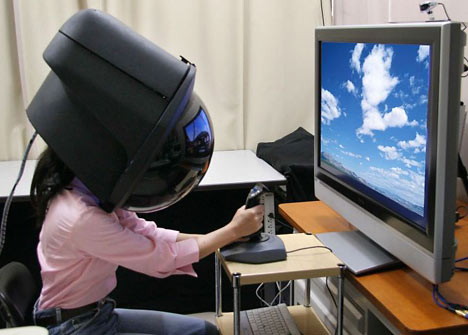 After an other bout of globe trotting, I am keenly aware of the various parallel existing and diverse realities.
While dwelling in rural African areas, it is difficult to contemplate a world where individual consumer demand is being satisfied with abundant and tuned availability, with shops that seemingly stock up everything. Where food is in abundance, water – cold and warm – never stop running from multiple taps inside a home, where there is little dust, everything appears aligned and clean, a world were people cherish individuality before community, where money comes in plastic forms, or out of a wall, and where people are busy have no time and appear to live in luxury and comfort. This seems virtual reality, only existing 'in stories'.
While dwelling in urban western settings, it is difficult to contemplate a world where basic commodities and resources are scarce and supply is erratic, activities are directed by weather and seasons, and markets offer more of the same, and time seemingly does not exit. Where gathering of food and water is a daily struggle, where written texts are not seen, activities are set by communities whom defines the individual. This seems virtual reality, which only exits 'in stories'.
These are no virtual realities, but worthwhile existing and real existences. Thus the challenge is to augment the visual or oral experiences - either by text or multimedia, or speech – with sensory information, with immersion, and real interaction.
Subscribe to:
Posts (Atom)


 Posts

